


What Is A Course Rating? Hear From Our Expert
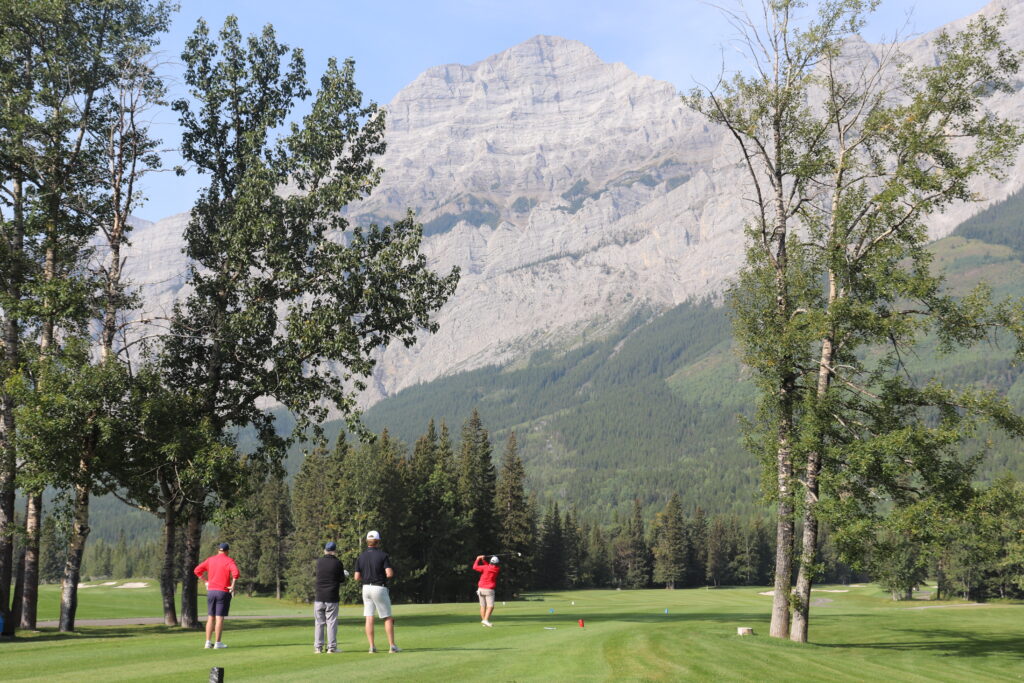
If you are a long-time golfer you may not realize how unique the sport is. It’s tough to take a step back and objectively look at the game you have adopted as part of your lifestyle. But committing 4 hours to walk around 100+ acres of land trying to put a tiny white ball in a hole while wearing a collared shirt isn’t exactly “normal”. If you have a spouse or significant other that doesn’t golf, it’s very likely they have already brought this up.
To get this objective look at golf, a good starting point is to compare it with other sports. Picture any other sport with various skill levels trying to compete in the same game. How do you make it fair? Maybe the tennis expert is forced to play with the wrong hand, the track star gives a head start, or the better hockey team needs to play with one less player on the ice. Quantifying the advantage given/taken can lead to tough situations, what if your hockey team is only half a player better? If you turn your mind back to golf, you quickly realize that the difference of skill levels is baked right into the sport.
The Handicap Index you carry as a golfer can (as of 2020) be taken around the world to compete on a fair and equitable basis with any other golfer. There are a lot of things that go on behind the scenes to make this a reality. Remember those 100+ acres of land you were wandering? They are split into 18 holes, and no 2 holes anywhere on the planet are the same. With such an overwhelming variety of golf courses, the keystone of the entire handicapping system becomes: Course Rating.
The average golfer will recognize 2 numbers when they are looking at a scorecard: the Course Rating and the Slope Rating. To reach these numbers, each hole will be measured for length, and inspected for up to 10 different obstacle factors that can impact the hole’s difficulty (water, sand, trees, green surface, etc.). Each hole will also be looked at from 4 different perspectives: a scratch male (0.0), a scratch female (0.0), a bogey male (20.0), and a bogey female (24.0). Time for our first question: Why is there a difference in Handicap Index between a male and female bogey player? Great question. There is a definite reason for this, but that won’t be the technical answer given here. The simplest answer (to almost any Course Rating question) is that although accuracy is very important, consistency is paramount. That might sound like a fancy way to say: “because that’s how it has always been”, and yes, it is. But the resistance to change from a Course Rating perspective is not for fear of change, it’s to keep things consistent. The overall goal of Course Rating is to provide a quantitative idea of how difficult a course is so it can be used to calculate a golfer’s Handicap Index. If the way we measure the difficulty of a golf course changes, all previously rated golf courses become outdated. Because a golf course is only re-rated every 10 years, that also becomes the period of adjustment for any singular change.
Once we have rated a golf course from our 4 different perspectives, we get two ratings. The “Course Rating” is the rating calculated using our scratch golfers. If a scratch golfer plays under normal course and weather conditions, this is what we have calculated they will shoot. The other rating we get is the “Bogey Rating”, or what bogey golfers would shoot under those same normal conditions. The Bogey Rating is not published as it alone does not directly impact anything for the golfer. What it does is help to determine the slope of the golf course. Simply put, the Slope Rating measures the difficulty of the course for Bogey Golfers compared to Scratch Golfers. Generally speaking, the harder a golf course, the higher a Slope Rating would be, but this is not always the case. A Slope Rating doesn’t need to be high if the course has been designed to be accommodating to the Bogey Golfer (i.e. less forced carries, wider fairways where bogey golfers would hit it, etc.). Next time you tee it up, try looking at a few holes from the 4 different perspectives. Maybe you will gain some perspective of your own on the intricacies of Course Rating.
Definitions Summarized
-
Course RatingWhat Is It
Measures the difficulty of the course for a scratch golfer (a player with a handicap of 0) under normal playing conditions.
-
Bogey RatingWhat Is It
Measures the difficulty of the course for a bogey golfer (a player with a Handicap Index of approximately 20.0 -24.0). The Bogey Rating is not commonly promoted but is essential when calculating the Slope Rating.
-
Slope RatingWhat & How To Calculate It
Compares the relative difficulty for a bogey golfer versus a scratch golfer. It is effectively the slope of the line (rise/run) between the Course & Bogey Ratings when plotted on a graph.
Course Rating is a volunteer position with many people dedicating their time and expertise to make sure Alberta golf courses are kept up to date. There is a substantial amount of communication, shared knowledge, and education between Course Raters in different cities, provinces, and even internationally. With over 35,000 golf courses across the globe, keeping things consistent is no small task!
Additional Resources
Five Handicapping Terms To Know This Winter
With colder weather well underway and many courses across the country shifting into winter routines, it’s a great time to brush up on a few Handicapping terms. Whether you’re still playing, travelling south for a round or two, or simply preparing for next season, understanding these concepts will help you get the most out of your Handicap Index all year round.
1. Playing Conditions Calculation (PCC)
The Playing Conditions Calculation (PCC) becomes especially relevant during Canadian winter and shoulder seasons. PCC automatically recalibrates Score Differentials on days when course conditions are notably harder or easier than usual. If the scores posted that day show that players, as a group, performed worse than expected, the PCC may adjust by +1, +2, or +3. Conversely, if scoring was better than anticipated, it may adjust by -1.
The best part? PCC is fully automatic. Golfers and clubs don’t need to do anything. The system reviews results at the end of each day, helping to keep your Handicap Index accurate and fair, even with unpredictable conditions.
2. Active Season
Canada’s Active Seasons vary by province. The Active Season is the period during which course conditions are suitable for generating acceptable scores for handicapping purposes. Any score recorded within a specific province during its Active Season will be included in your Handicap Index.
To simplify this process, the Golf Canada Score Centre automatically recognizes the Active Season of the course being played. Golfers simply post their round, and the system handles the rest. For more information on Active Seasons, please click here.
3. Most Likely Score
The most likely score is used when a golfer begins a hole but doesn’t finish it. This is especially common during cold weather rounds when players pick up more often.
To determine your most likely score, take:
· The strokes you have already taken (including penalties), plus
· The estimated number of extra strokes you would likely require to complete the hole from your current position.
The Rules of Handicapping include recommended guidelines. For example, if you’re within 5 feet, add 1 stroke; if you’re between 5 and 20 feet, add 2 or 3 strokes.
For more details on the most likely score, see Rule 3.3 in the Rules of Handicapping.
4. Scoring Record
A common misconception is that rounds played during your home province’s inactive season shouldn’t be posted because they won’t count toward your Handicap Index. While it’s true that inactive season rounds don’t factor into your Index, you should still post them, especially if you’re travelling somewhere that is in an active season.
So even if your course is open but not in its active season, or you’re playing somewhere that is in their active season, be sure to post all your scores. This helps you maintain a complete scoring record, even if some rounds don’t directly impact your Handicap Index.
5. Simulator Golf
Simulator golf continues to expand across Canada as winter leagues and indoor facilities become more prevalent. While excellent for skill development, competition, and enjoyment, simulator rounds cannot be posted for handicap purposes.
Why not?
· Simulators don’t have official ratings
· Playing conditions are controlled rather than natural
· Although simulators can be highly accurate, it’s tough to replicate variables such as elevation change, firmness, wind, rough length, etc.
Though simulator scores do not count toward your Handicap Index, we strongly encourage golfers to use these facilities during the winter. For more information on the benefits of simulator golf and how to find a facility near you, please visit the homepage for our new Just Swing initiative.