


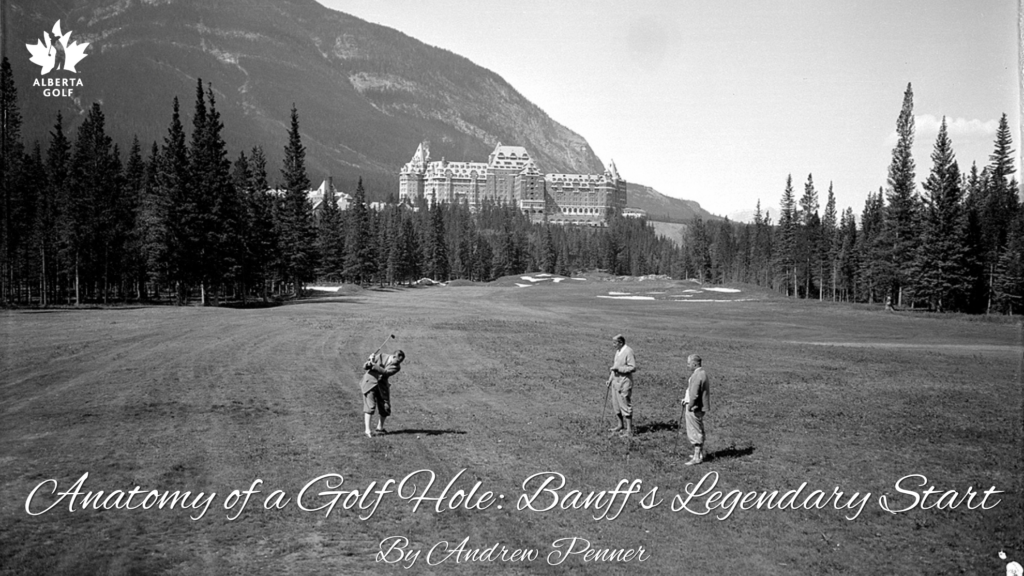
Ask any golfer: the start of every round is a key moment. The opening hole sets the stage. And, for decades, golf course architects – and, yes, golfers just like you – have revered a riveting start; a hole that truly captures what the next four hours will entail. And Banff’s legendary original starting hole – now the par-4 15th – was one of the best that the game has ever seen.
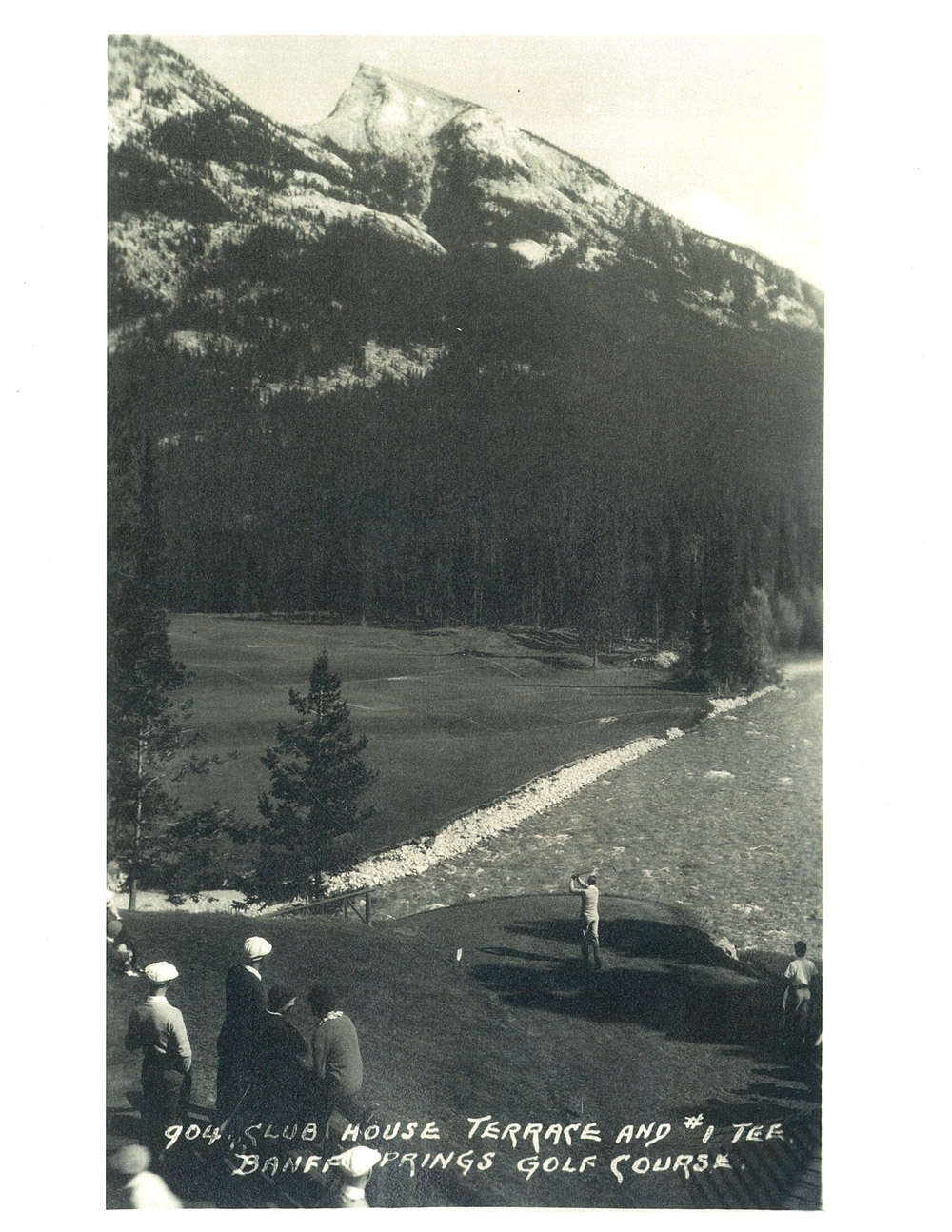
(Courtesy of Fairmont Banff Springs)
Perched on a high ledge just below the castle-like Fairmont Banff Springs Hotel, the spirited Spray River below, Bow Falls thundering nearby, Mount Rundle looming beyond the fairway, the opening hole at Banff Springs was one for the ages. A strong, gently-bending 400-yard par-4 with a heroic shot over the river, a swarm of stunning bunkers protecting the right side of the fairway and towering pines left; it was a sublime way to start a round. No wonder many connoisseurs from around the world stated that this was the grandest start in golf.
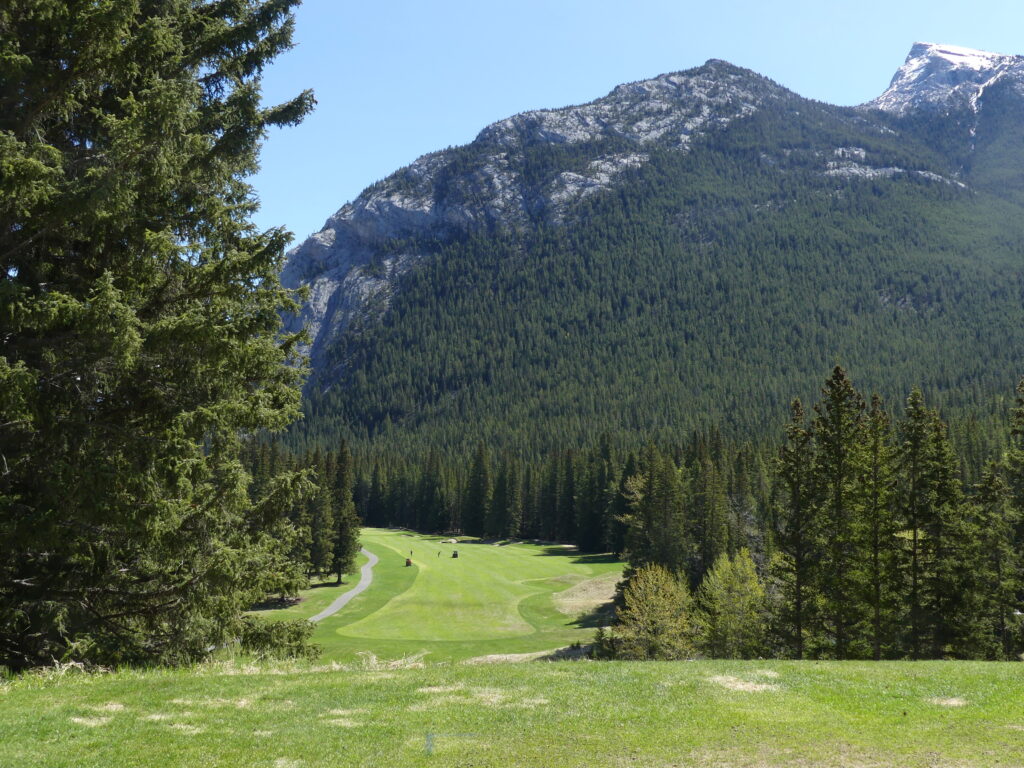
Of course, when Banff’s routing was changed in 1989, Banff’s iconic opening hole was no more. The 1st hole became the 15th. The awesome par-4 18th became the 14th, etc. The new clubhouse location – necessary due to logistics, including access, staging, parking, automobile traffic, the new Tunnel Nine, the practice facility, and so on – meant Stanley Thompson’s mountain masterpiece would unfold in a different way. And, while many golfers to this day still wish the original routing was still intact, the sublime golfing experience in Banff has not wavered.
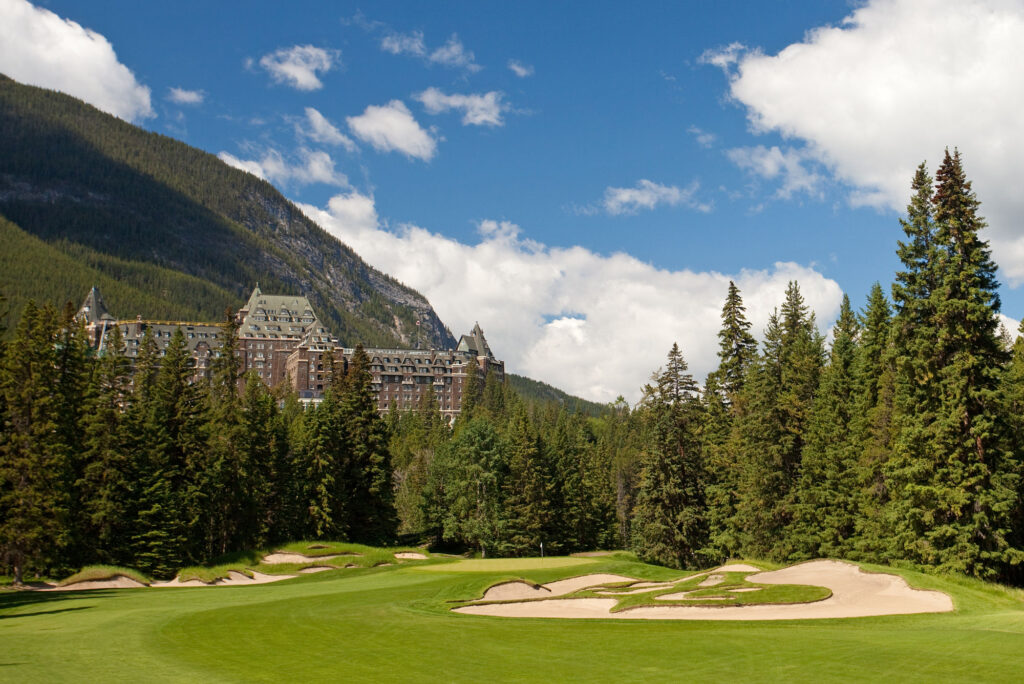
finishing hole (Courtesy of Andrew Penner)
“When it comes to change, time is your friend,” says Director of Golf, Steve Young. “Yes, the course now has a different rhythm. Unlike the previous finish, there are birdies to be made on the closing run now. And, of course, today’s starting hole is a relatively easy par-4. Many people like this. And, of course, you get to look forward to the old start for the majority of the round. Bottom line, the golf course is, regardless of which routing you prefer, a mountain masterpiece.”
One of the best descriptions of the old 1st I’ve come across was in the highly-respected digital journal, Golf Club Atlas. This interesting publication – at least for fans of golf course architecture! – is mostly written by Ran Morrissett, an expert in golf course architecture who now pens stories for Golf Magazine. It states: “The 1st (15th) is an awe-inspiring handshake from the gods. The player must rope a draw across the Spray River, choosing their line off the eastern end of Rundle Mountain. It’s here Thompson begins to introduce you to the tests that you will face at Banff. The course is defined by challenging drives to specific points in the fairway. Normally these spots are protected by a bunker or another hazard. So playing towards danger is rewarded. On the 1st, golfers who take on the left tree line are rewarded with a better angle rather than those who hit a safe ball to the right half of the fairway. This theme of reward for taking on challenges is a hallmark of Banff.”
The Alberta Golfer Centennial Issue “The Architects of Alberta’s Golf Scene”
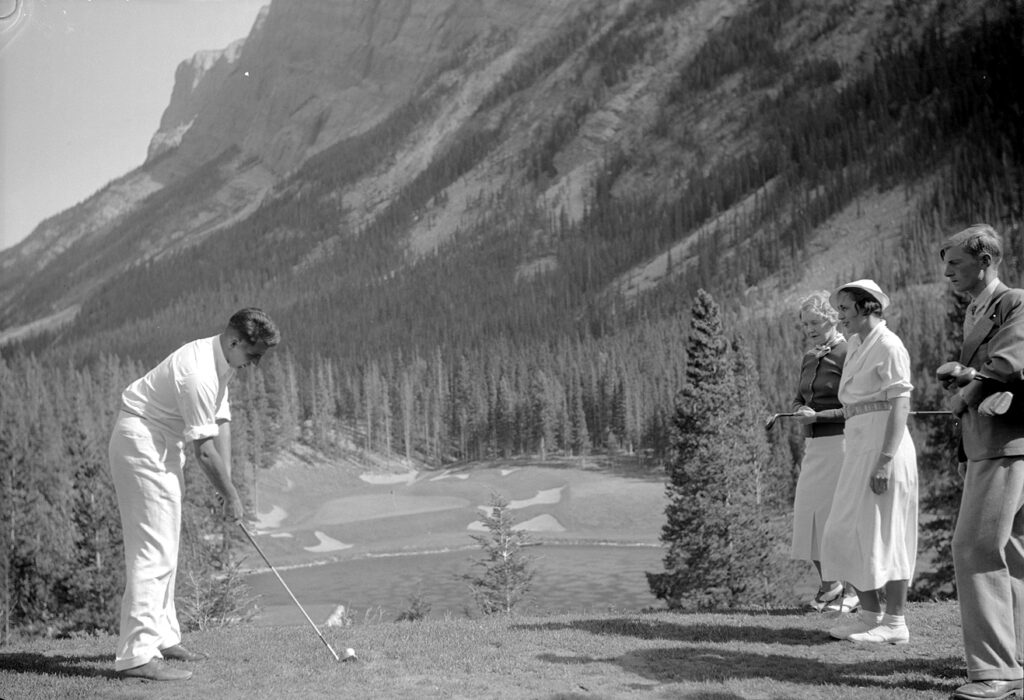
Interestingly, as good as this hole is, it certainly isn’t the most famous or photographed hole at Banff. That honour belongs to the exquisite “Devil’s Cauldron” – the par-3 4th (it used to be the 8th) – which is often touted as one of the greatest one-shotters in golf. From a raised tee deck the golfer must hoist a short or medium-iron over a turquoise lake to a punchbowl green ringed with an unruly clutch of bunkers. The artistry is awesome, the setting sublime, the challenge unforgettable.
And these fantastic moments are a hallmark of playing the course. The run of holes along the Bow River, the regular wildlife sightings, the old Tudor-style clubhouse (now the German-inspired Waldhaus restaurant); these all make for an extremely memorable golf adventure.
Not surprisingly, with a course as old and storied as the Fairmont Banff Springs, much has been written on the merits of playing golf in this historic place. And, certainly, the wonderful start at the hotel is still a big part of that story.