



Alberta Golf extends its sincere gratitude to all those who have served, and continue to serve, our country. We honour the courage, dedication, and sacrifice of those who answered the call of duty, and we remember those who gave their lives in service to Canada.
On November 11, we pause to reflect, remember, and honour all those who served. Lest we forget.
Like many organizations connected to the game of golf, Alberta Golf has a long and storied history. Established in 1912 as the Alberta Golf Association (AGA), the organization has now been part of Alberta’s sporting landscape for more than 110 years. Throughout that time, the association and its member clubs have experienced significant periods of growth, uncertainty, and change, from economic prosperity and declining memberships to club closures and the challenges of maintaining golf courses through difficult times.
These experiences have helped shape the history of golf in our province. However, in recognition of Remembrance Day, we wanted to look beyond the development of the game itself and reflect on what life was like for Alberta’s golf community during the First and Second World Wars. More importantly, we wanted to recognize some of the individuals who served their country and the ways in which Alberta’s golf community contributed during these extraordinary periods in our history.
When the First World War began in 1914, golf was still a relatively young game in Alberta. Just three decades earlier, the Browning brothers had introduced the game to the province, taking their gutta-percha balls and hickory clubs out for what is believed to have been one of Alberta’s earliest rounds of golf.
The First World War (1914–1918)
The First World War marked golf’s first significant period of disruption in Alberta. The game had only begun to establish itself across the province when the outbreak of war brought competitive golf to a standstill. Tournaments were cancelled, memberships declined, and many of the young clubs faced financial uncertainty.
Perhaps most significantly, the war presented considerable challenges for clubs that were still establishing themselves, purchasing land, and developing their courses.
The Clubs
Golf clubs throughout Alberta faced difficult circumstances during the war years. Reduced memberships, financial pressures, and the economic challenges of the period made it increasingly difficult to maintain operations. The introduction of Prohibition added another challenge for clubs that relied, in part, on social activities and related revenue.
The Fort Macleod Golf Club was among the most notable casualties of this period, eventually disappearing from the historical record. With many of the town’s men serving overseas, maintaining the club became increasingly difficult. They did however return after the war.
Edmonton Country Club also experienced significant challenges. As the economic downturn affected communities across the country, Edmonton faced widespread financial difficulties, with the city reclaiming approximately 75,000 lots because of unpaid property taxes.
The club felt these economic pressures firsthand. Charles Saunders, a local businessman, was unable to complete his purchase of 80 acres of land from the club and ultimately defaulted on the agreement. Maintaining the golf course also became increasingly difficult, leading the club to introduce sheep to graze the lower nine holes. The course eventually closed in November, before reopening the following year. To generate additional revenue, the club also began selling hay.
Membership numbers reflected the difficult circumstances. From approximately 400 members in 1913, Edmonton Country Club’s membership had fallen to just 96 golfers by 1917.
Calgary Golf and Country Club faced similar financial pressures. Having purchased land from the Canadian Pacific Railway (CPR) only a few years earlier, the club was struggling to keep up with its mortgage payments. A new agreement was eventually reached in which the club provided memberships to the CPR in lieu of mortgage payments. These arrangements included a membership for the manager of the Palliser Hotel, a CPR property, allowing him to introduce hotel guests to the game of golf.
The Members
While the clubs were dealing with financial and operational challenges, many of their members were answering a much greater call to serve. Men from communities throughout Alberta enlisted and were sent overseas, leaving behind their families, livelihoods, and, in many cases, their golf memberships.
Recognizing the circumstances facing these members, several clubs made accommodations for those serving overseas. Membership payments were suspended or reduced, allowing members to retain their standing at the club until they returned home.
Although specific individual accounts from Alberta golfers who served during the First World War have been difficult to identify, the legacy of those members remains visible today.
The Calgary Golf and Country Club, for example, proudly maintains a stone memorial near the 10th tee bearing the names of members who served. It stands as a lasting reminder of the individuals who were part of the club community and who answered their country’s call.
A Post-War Boom
When the First World War came to an end in 1918, soldiers began returning home, and Alberta’s golf community entered a remarkable period of growth.
The post-war years brought significant social and economic changes. Wages were increasing, fashion and lifestyles were evolving, and the automobile was becoming more accessible, replacing the horse and carriage as a common means of transportation. With communities growing and recreational opportunities expanding, interest in golf surged.
Alberta was at the forefront of this growth, leading the country in the development of new golf facilities. The number of courses in the province increased from just nine in 1919 to 65 by 1927.
This expansion reached communities of all sizes. Rural golf clubs emerged in places such as Coronation and Vulcan, while urban golf continued to flourish with the establishment of several iconic facilities. Royal Mayfair Golf Club was founded in 1922, while Earl Grey Golf Club in Calgary opened in 1919.
Resort golf also experienced tremendous growth. Banff Springs expanded to 18 holes in 1923 under the direction of renowned golf course architect Stanley Thompson, while Jasper Park Golf Club opened in 1926.
Municipal golf was also gaining momentum. Victoria Golf Club, Canada’s first municipal golf course, opened in Edmonton in 1914 on the former grounds of Edmonton Country Club. In Calgary, Shaganappi Point began its development in 1917, with further expansion taking place in 1920.
Over the following two decades, Alberta would establish itself as an important contributor to Canadian golf. The province produced its first prominent champions, including Charlie Hague and Tom Gillespie, while Alberta golfers increasingly made their presence felt on the national stage. Women’s golf also continued to develop, with Alberta becoming part of the Canadian Ladies Golf Union.
The growth of the game during this period was remarkable, but the next global conflict would once again test the resilience of Alberta’s golf community.
The Second World War (1939–1945)
Following the tremendous growth of the 1920s, Alberta experienced another difficult chapter with the onset of the Great Depression, followed by the Second World War.
The economic hardship of the 1930s had already placed considerable strain on golf clubs and their members. When Canada entered the Second World War in 1939, the challenges intensified once again.
As members left to serve overseas, clubs faced declining memberships, rising operating costs, and shortages of essential resources. Even travelling to the golf course became more complicated, as gasoline rationing limited personal vehicle use. Carpooling became increasingly common among members as they found ways to continue enjoying the game.
As they had during the First World War, many clubs also made accommodations for members serving overseas, ensuring that their memberships would remain available upon their return.
Despite these challenges, Alberta’s golf community found ways to contribute to the war effort, both overseas and on the home front.
The Clubs
Golf courses throughout the province once again saw many of their members leave to serve. Those who remained faced the financial pressures of wartime living, including rising costs for memberships, equipment, and course operations.
However, clubs were not simply focused on maintaining their facilities. Many found meaningful ways to support Canada’s broader wartime efforts through fundraising, food production, and volunteer initiatives.
At Royal Mayfair Golf Club, Tommy Morrison put the grounds to use by planting vegetables as part of the home-front war effort. The area became affectionately known as “Tommy’s Potato Patch.”
At Earl Grey Golf Club, the ladies’ section organized raffles, weekly bridge games, and individual donations to establish the club’s Spitfire Fund, helping support the war effort. Members also volunteered their time to carry out essential work around the club, ensuring its continued operation during a period when resources and labour were limited.
Edmonton Country Club also found ways to support the changing circumstances of the time, selling house memberships to members of the United States Air Force who were stationed in Edmonton.
These efforts demonstrated how golf clubs could remain connected to their communities and contribute in meaningful ways, even during a period of considerable uncertainty.
The Association
As had been the case during the First World War, competitive golf across Alberta was affected by the demands of the conflict.
Many tournaments were cancelled, although the Alberta Open was considered important enough to continue, allowing professional golfers to maintain their competitive opportunities.
The amateur championship, however, was suspended. Instead, the Alberta Golf Association took part in Red Cross fundraising tournaments alongside other organizations across Canada, helping raise funds and provide support for those affected by the war.
Although the competitive calendar was reduced, the association continued to find ways to contribute beyond the game itself.
The Members
Among Alberta’s golfing community were several accomplished players whose lives and careers were directly affected by the Second World War. Some stepped away from the game to serve overseas, while others found different ways to contribute to the war effort at home.
Their stories are an important part of Alberta golf history, demonstrating that the individuals who helped shape the game were also members of a much larger community called upon to serve during a defining period in Canadian history.
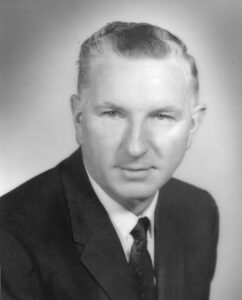
A member of both the Canadian and Alberta Golf Halls of Fame, Henry Martell had already established himself as one of Canada’s leading golfers before the Second World War.
Following his victory at the 1939 Canadian Amateur Championship, Martell faced an important decision: continue pursuing a career in professional golf or find more stable employment during a period of uncertainty.
Having recently been named Canada’s Golfer of the Year, the decision was not an easy one. Ultimately, Martell entered a different profession, serving as an Edmonton police officer for nine years. During that time, he became affectionately known as “The Golfing Policeman.”
In 1946, Martell returned to competitive golf in remarkable fashion, winning the Canadian Amateur Championship once again. He would later become the Head Professional at The Highlands Golf Club, where he remained until his retirement.
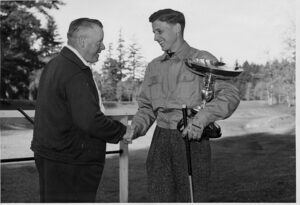
Another member of the Alberta Golf Hall of Fame, Bill Tait dedicated four years to serving during the Second World War.
Following his return, Tait quickly re-established himself as one of Alberta’s leading golfers, capturing the 1946 Alberta Open and the 1951 Men’s Amateur Championship.
His legacy at the club extends beyond his accomplishments on the course. Tait is also remembered for his leadership, humility, and dedication, qualities that helped define his contribution to the golfing community.
The Calgary Golf and Country Club also published a particularly meaningful account in its centennial book, reflecting on the experiences of members returning home following the war. It offers insight into the transition many veterans faced as they attempted to reconnect with their communities and resume their lives after years of service.
Lest We Forget
The history of Alberta golf during the First and Second World Wars is about far more than cancelled tournaments, declining memberships, or the challenges faced by golf clubs. It is also a reflection of the people, communities, and shared experiences that shaped our province during some of the most difficult periods in modern history.
Throughout both conflicts, Alberta’s golf community adapted to extraordinary circumstances. Clubs found ways to remain operational, the association supported fundraising initiatives, and members contributed to the war effort in ways that extended well beyond the golf course.
Yet, above all, these years remind us of the individuals who stepped away from their everyday lives, families, careers, and passions to serve their country. Some returned home and eventually found their way back to the game they loved. Others made the ultimate sacrifice and never had that opportunity.
Their stories are an enduring part of Alberta’s history, and their contributions should never be forgotten.
This Remembrance Day, Alberta Golf extends its heartfelt gratitude to all those who have served and continue to serve Canada. We honour those who made the ultimate sacrifice, recognize the families and communities who supported them, and remember the lasting impact of their service.
Lest we forget.